


Ghana’s new Sports Fund says it wants to build a national sports development system that can identify talent across the country’s more than 58 sporting federations, rather than concentrating resources and attention on football.
The Fund is planning a National Sports Development Academy to support grassroots talent identification and development across multiple sporting disciplines.
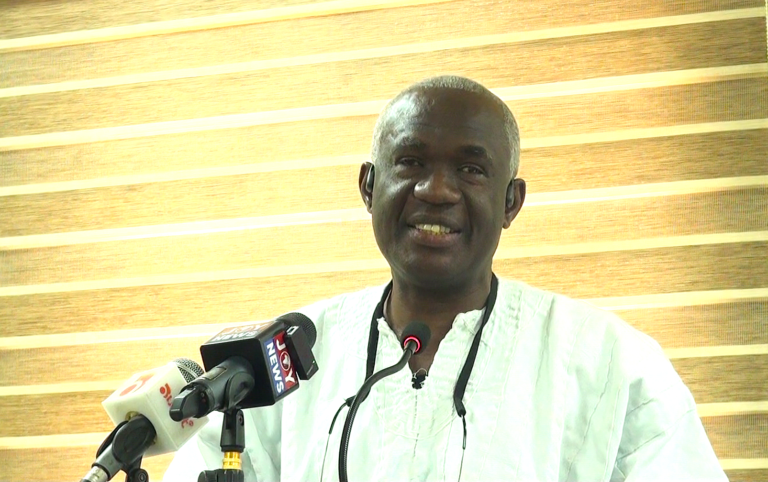
Dr David Kofi Wuaku, Administrator of the Ghana Sports Fund, said the initiative would form part of the institution’s efforts to create a stronger pipeline from grassroots participation to elite sport.
Football remains one of Ghana’s most prominent sporting industries, but Wuaku said the Fund was deliberately taking a broader approach.
“In this country alone, we have over 58 federations of sports,” he said.
The Fund plans to engage the federations to understand their needs and identify opportunities to bring less-publicised disciplines to a wider audience.
Wuaku said the institution was being careful not to divide sports into major and lesser categories. “We are saying sports, sports, sports,” he said.
The approach is based on the Fund’s mandate to support sports development broadly, including grassroots participation and talent identification.
Wuaku said one of the problems facing Ghanaian sport is that many academies currently operate under private ownership.
Private operators, he argued, naturally have to consider commercial returns when deciding where to invest.
The proposed National Sports Development Academy would instead provide a national platform for identifying young talent across the country.
The Fund already has a coordinator responsible for schools and grassroots sports development, according to Wuaku, and the institution intends to use that structure to identify talent across different regions.
“From there we identify talent, not only in football, athletics, boxing,” Wuaku said.
The focus on grassroots development also aligns with the Fund’s broader objective of creating opportunities before athletes reach elite competition.
The Fund’s leadership sees sports development as more than a government expenditure.
Wuaku said Ghana could use sport to create economic opportunities for future generations, arguing that the global sports economy demonstrates the financial scale that successful athletes and sporting systems can achieve.
The board chairperson, Prof. Koryoe Anim-Wright, similarly said Ghana’s sporting achievements have demonstrated the power of sport to promote the country internationally.
The chairperson pointed to the recognition of Ghanaian sporting icons such as Abedi Pele and Azumah Nelson abroad as evidence of how athletes can become ambassadors for national identity.
The Fund’s mandate therefore includes both sports development and “sports for development”, with resources expected to support infrastructure, athletes, coaches, administrators, grassroots and school sports, national teams and athlete welfare.
The Fund also says its proposed structure should be strong enough to withstand changes in political leadership. Wuaku said the board wants to establish systems that cannot easily be diverted from their intended purpose.
“We are trying to set up a foundation very robust and solid that even if we are not here, you can’t come and put any flimsy structure on it,” he said.
The Fund is currently developing regulations governing its operations and disbursement of resources.
Its board chairperson said the Ghana Sports Fund Act 2025, Act 1159, provides the legal framework for a dedicated and sustainable source of sports financing.
For the Fund, the ambition is ultimately to build an ecosystem in which grassroots talent, sporting federations, athletes and the wider economy benefit from sustained investment.
TN Africa’s Take
Ghana does not lack sporting talent; it has often lacked the systems capable of finding, developing and retaining that talent. A national sports academy could help change that equation if it genuinely reaches beyond football and beyond Accra. The real opportunity is to turn the country’s many sporting disciplines into a coordinated talent and economic pipeline. Ghana’s sports future should not depend on discovering the next star by accident.