


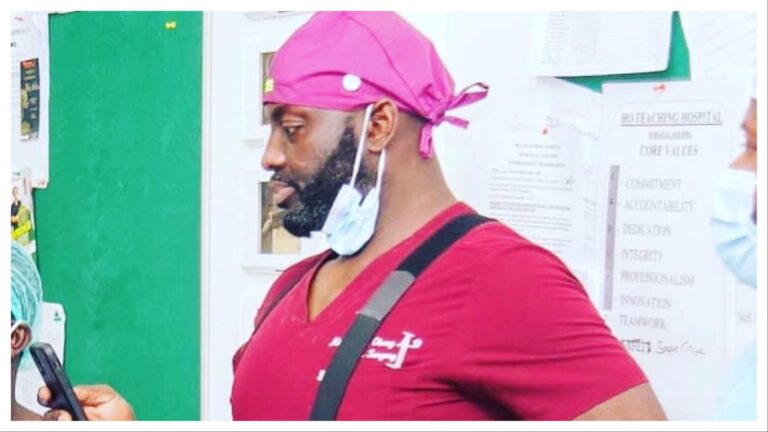
For most of his career, Dr. Michael K. Obeng’s work has been measured in lives restored. As a globally renowned reconstructive and plastic surgeon based in Beverly Hills, California, his reputation has been built on precision, discipline, and an ability to perform some of the most technically demanding procedures in modern medicine.
Yet despite decades spent mastering the operating room, Dr. Obeng’s attention is increasingly focused on a different kind of reconstruction, one that extends far beyond individual patients. Today, he is thinking about infrastructure, pharmaceutical manufacturing, healthcare sovereignty, and how Africa can move from dependence to self-sufficiency.
“I shifted from participating in systems to designing them,” Dr. Obeng tells The Newsroom Africa.
It is a statement that captures the evolution of a man whose ambitions have grown beyond professional success. For him, the next frontier is not personal achievement but institution building.
Many successful Africans spend their careers navigating existing systems. Few reach a point where they begin asking how those systems can be redesigned. For Dr. Obeng, that turning point came through years of humanitarian work.
Through RESTORE Worldwide Inc., the humanitarian organization he founded in 2008, thousands of patients across the world have received life-changing reconstructive surgeries with monetary value exceeding $100 million. The work has alleviated suffering, restored dignity, and transformed lives. But over time, it also exposed deeper structural realities.
“Surgical deserts, supply chain fragility, and overdependence on imported pharmaceuticals became undeniable,” he reflects.
The lesson was clear: medical missions can save lives. They can fill urgent gaps. But they cannot solve systemic problems. “Missions relieve suffering. Infrastructure changes trajectory.”
That realization became the foundation of a broader vision, one that seeks not only to provide care but to strengthen the systems that make care possible in the first place.
For Dr. Obeng, healthcare access and healthcare independence are inseparable. That thinking led to MiKO Pharmaceuticals, an investment aimed at reducing dependence on imported medicines and strengthening local manufacturing capacity.
“RESTORE addresses surgical access. MiKO Pharmaceuticals addresses sovereignty,” he explains. “One restores function. The other restores independence.” The distinction is significant.
Across much of Africa, healthcare systems remain heavily reliant on imported medicines, vulnerable supply chains, and external production. Events such as the COVID-19 pandemic, EBOLA, amongst others, exposed the risks of this dependence, reinforcing calls for local manufacturing and stronger healthcare resilience.
Dr. Obeng believes the future lies in building capacity on the continent itself. “Local production under internationally recognized regulatory standards strengthens resilience and stabilizes access to essential generics.”
For him, sovereignty is not an abstract political concept. It is operational. It is measurable. It is the ability to manufacture, regulate, distribute, and sustain healthcare systems that serve African populations without excessive external dependence.
Long before he became a surgeon, entrepreneur, and philanthropist, Dr. Obeng was a young boy growing up in Ashtown, Kumasi. His worldview was shaped by his grandmother, whose lessons focused less on circumstance and more on character. “My grandmother raised me in Ashtown. She spoke the language of discipline, not limitation.”
Her message was simple. “Poverty was never identity; it was a condition that education and focus could outgrow.” Those lessons would eventually carry him through some of the world’s most respected institutions and into operating rooms where excellence is assumed and mediocrity is quickly exposed.
“When you enter elite institutions, competence is assumed. Composure is evaluated.” Dr. Obeng believes success was never simply about intelligence or talent. It was about consistency, preparation, and emotional discipline. “Those who lead understand that consistency is power.”
The discipline required to become an elite surgeon has shaped much of Dr. Obeng’s philosophy. He describes excellence not as brilliance, but as preparation. “Elite surgeons rehearse before they operate. They anticipate complications before they manifest. They operate without ego.”
At the heart of that mindset lies accountability; one of the defining experiences of his career came through microsurgery, highly specialized procedures involving the reconnection of blood vessels only millimeters in diameter. “Microsurgery changed everything for me. It demands stillness, endurance, and total accountability.”
Working in Beverly Hills and serving high-profile clients has only reinforced another lesson. “Tissue does not recognize fame. Anatomy is democratic. Risk is impartial.”
Despite the visibility, wealth, and influence that often surround his work, he insists the operating room remains one of the few places where status carries little value. “The operating room has one hierarchy: safety.”
Dr. Obeng’s vision for institution-building is underpinned by a career that has earned recognition across medicine, humanitarian service, and global health leadership.
The Harvard-trained, board-certified plastic and reconstructive surgeon has spent decades establishing himself as one of the most respected specialists in his field. Through RESTORE Worldwide Inc, he has led medical missions across Africa and beyond, providing free reconstructive surgeries and medical outreach to underserved communities while helping build local healthcare capacity.
His contributions have earned international recognition, including the NAACP Humanitarian Award, the United States President’s Volunteer Service Award, the GUBA Humanitarian Spirit Award, and inclusion on the prestigious EBONY Power 100 List, which celebrates influential Black leaders and changemakers around the world.
Most recently, he was honored with the African Humanitarian Award at the African Heritage Awards in Accra, recognizing his commitment to expanding healthcare access and transforming lives through humanitarian service across continents.
Yet despite the accolades, Dr. Obeng remains focused on responsibility rather than recognition. “Recognition signals responsibility, not popularity.”
For him, awards are not the culmination of a journey. They are reminders that the work of building institutions, expanding access, and creating lasting impact is far from complete.
Dr. Michael K. Obeng’s vision extends beyond healthcare. It also speaks to a broader conversation about the role of the African diaspora in development.
For decades, remittances have supported families and communities across the continent. Yet Dr. Obeng believes a more transformative opportunity exists. “Remittances sustain households. Reinvestment builds institutions.”
The distinction reflects his belief that long-term development depends not only on financial support but on strategic investments that create systems, industries, and opportunities capable of outlasting individual contributions. He advocates for a model rooted in partnership rather than paternalism and infrastructure rather than optics. “Execution is the new validation. Standards are global.”
For many accomplished professionals, legacy is measured by awards, recognition, or career milestones, but Dr. Obeng sees it differently.
When asked what lasting change he hopes to create, his answer is strikingly specific. He envisions pharmaceutical manufacturing capacity operating at internationally recognized standards, stronger regulatory systems, specialized training pipelines, and greater healthcare independence across Africa.
In other words, institutions, not monuments, headlines, nor Institutions. Because while surgery built his reputation, he believes infrastructure will define his impact. “Surgery built discipline. Infrastructure will define legacy.”
It is a statement that captures both the evolution of his career and the philosophy that now drives him. At a time when conversations about African development increasingly focus on ownership, resilience, and self-determination, Dr. Michael Obeng’s journey offers a compelling argument that the continent’s future will not be secured by talent alone. It will be built by institutions.
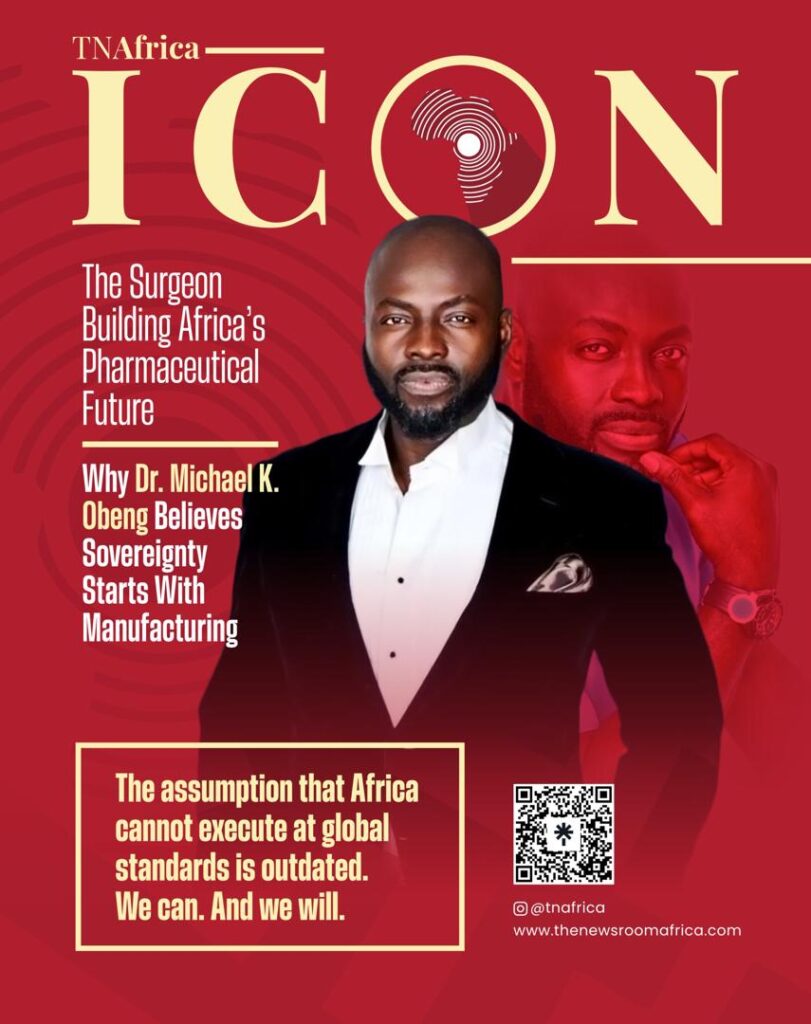
And for those who still question Africa’s ability to compete at the highest levels, he offers a final response: “The assumption that Africa cannot execute at global standards is outdated. We can. And we will.”