


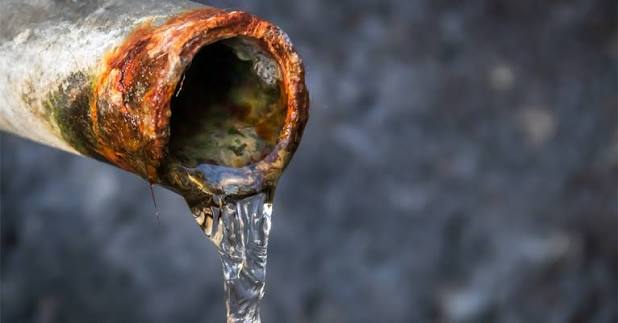
One in three children globally has unsafe levels of lead in their blood. In Africa, the problem is acute, the sources are everywhere, and the monitoring is almost non-existent. This week, the world is being asked to pay attention.
The paint peeling off the walls of an old school in Accra. The recycled cookware sold in a Nairobi market. The car battery being dismantled by hand in a Lagos backyard. The brightly coloured toy in a child’s mouth in Dakar.
None of these images look like a public health emergency.
More than 800 million children worldwide have unsafe blood lead levels, and the damage being done is largely invisible. Lead has no smell, no taste, and no immediate visible symptoms in the early stages. By the time the harm is apparent, it is often already permanent.
The fourteenth International Lead Poisoning Prevention Week runs from 18 to 24 October 2026, under the theme From Detection to Prevention. The theme is pointed: you cannot prevent what you cannot see, and in much of Africa, almost nobody is looking.
The scale of what is happening
Lead exposure was attributed to more than 3.5 million deaths globally in 2023, primarily due to cardiovascular effects, according to the Institute for Health Metrics and Evaluation. That figure is larger than most people expect, and most of those deaths are in low- and middle-income countries.
There is no level of exposure to lead that is known to be without harmful effects. For children, the consequences are particularly devastating. Lead can permanently affect children’s brain development, resulting in reduced intelligence, behavioural changes including reduced attention span and increased antisocial behaviour, and reduced educational attainment.
In practical terms: a child who grows up with elevated lead levels in their blood is likely to perform worse in school, struggle more in adulthood, and earn less over a lifetime. Children may absorb up to four to five times as much lead as adults from the same ingested dose. Their developing brains and bodies make them uniquely vulnerable to a toxin that the adult world has largely normalised.
The global data on lead poisoning is alarming. The African data is, in many cases, simply absent, which is itself the story.
Lead can be found in everyday products, workplaces and environments, including battery recycling plants, e-waste, lead-based paint, contaminated soil, cookware, spices and cosmetics. All of these exposure pathways are present across African cities and communities. Informal battery recycling is widespread. E-waste dumping sites exist in Ghana, Nigeria, and elsewhere. Lead-based paint regulations, where they exist at all, are poorly enforced.
As of January 2024, only 48 percent of countries globally have legally binding controls on lead paint. In Africa, the number is considerably lower. The continent that bears some of the highest exposure risk has the fewest legal protections and the least data to understand the scale of the problem.
Vital Strategies, a global public health organisation working on lead poisoning prevention, is currently working with governments in more than 20 countries to help answer critical questions, including who has been exposed to lead and what the sources are, in order to characterise the problem and catalyse action. Their work is expanding, but the gap remains enormous.
The sources most people have not heard of
Battery recycling gets most of the attention in African lead poisoning discussions. It deserves that attention; informal smelting operations expose workers, nearby residents, and children to dangerous levels of airborne and soil-deposited lead. But it is not the only source.
Contaminated spices. Certain cosmetics marketed to African consumers, including some skin-lightening creams. Traditional medicines in some communities. Ceramic cookware with lead glazes. Each of these is a pathway that is rarely discussed and rarely screened for.
The effects of lead poisoning contribute to 5.5 million cardiovascular deaths annually, a figure that dwarfs many of the health conditions that receive far greater attention and funding on the continent.
The 2026 campaign theme, From Detection to Prevention, reflects the reality that lead poisoning is often not visible, can arise from different sources, and needs to be identified before actions can be taken to protect health.
Detection requires blood lead testing. In most African countries, the infrastructure to do this at scale does not exist. Vital Strategies reports that approximately 8,000 children have been tested for lead poisoning across five countries, with plans to test approximately 56,000 adults and children in twelve countries by 2028. These numbers, while significant as a starting point, represent a fraction of what is needed.
The consequence of this gap is a continent of children growing up with a measurable, preventable burden on their cognitive development, and governments that cannot quantify the problem, let alone address it.
The harmful impacts on health from lead exposure are entirely preventable, according to the WHO. That sentence matters. This is not a natural disaster. It is a policy failure, one that can be corrected with the right combination of regulation, surveillance, and public education.
WHO and UNEP lead the Global Alliance to Eliminate Lead Paint, which aims to encourage all countries to develop legally binding laws to control the use of lead in paint. Campaigns like International Lead Poisoning Prevention Week exist to build the political and public pressure that makes those laws happen.
At the community level, the actions are simpler: wash hands before eating, especially in areas near battery recycling or industrial sites. Check the source of cookware. Be aware of the lead content in cosmetics. None of these actions substitute for government regulation, but they save lives while the regulation catches up.
TN Africa’s Take
Lead poisoning rarely appears in African health policy conversations. It does not generate the media coverage of malaria, cholera, or COVID-19. Yet it is quietly shaping the cognitive potential of millions of African children right now, in their homes, schools, markets, and playgrounds. The silence around it is not because the problem is small. It is because the monitoring is absent. You cannot report what you do not measure.
International Lead Poisoning Prevention Week is a reminder that the first step toward solving this crisis is simply deciding to look. Africa must start looking.
Source: The Newsroom Africa