


Africa’s climate narrative has long been dominated by external voices, often depicting the continent as a victim of disasters rather than a hub of solutions.
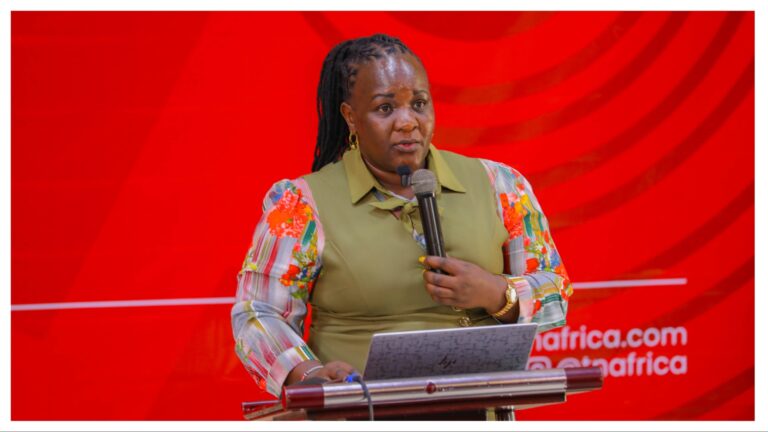
At the second TN Africa Digital Journalism Summit, Dr. Winnie Ndeta Otsiulah, Head of the Communications Department at St. Paul’s University, emphasized the critical role of communicators and digital creators in reshaping that narrative.
“As communicators, as digital creators, we are the gatekeepers in communication. Yet, the dominant narratives that often paint Africa as a victim and a backdrop for global grief must shift.”
“We need to remain in our spaces in the universities and relevant communities. We have to go down to the people, because remember, these solutions are not to remain in the papers we publish and put on library shelves,” Dr. Ndeta said.
The summit, themed “Telling Africa’s Climate and Food Story in the Digital Age,” brought together journalists, climate specialists, and digital creators from across Africa to share knowledge, discuss climate impacts, and explore innovative ways to tell Africa’s own climate and food stories.
Dr. Ndeta, a renowned academic and disability rights advocate, stressed that storytelling must include marginalized communities, particularly those displaced by climate crises or living with disabilities. “Inclusive storytelling ensures that climate solutions benefit all, not just a few,” she said.
Her insights drew on both academic research and practical engagement. As a scholar who has trained countless communicators and journalists, Dr. Ndeta highlighted the responsibility of media professionals to bridge knowledge gaps and translate complex climate data into accessible narratives that drive action.
The Kenya summit built on TN Africa’s inaugural Digital Journalism Summit in Ghana, held at the British Council, which trained over 300 young journalists and content creators in solution-focused climate storytelling. “The Ghana summit demonstrated the power of equipping youth with skills to tell their own stories, and in Kenya, we are taking it a step further by linking storytelling to tangible climate and food action,” she noted.
Dr. Ndeta also participated in panel discussions with innovators and conservationists, including Joyce Koech, Bonnke Museeve Mulaama, and other climate specialists. Together, they explored how effective communication can amplify local solutions, inspire communities, and attract international support.
In her closing remarks, Dr. Ndeta called on African communicators to remain active, creative, and solution-oriented, stressing that accurate storytelling is not just a professional obligation but a social responsibility.
“Every story we tell has the power to shape perception, influence policy, and mobilize communities,” she said. “Africa’s climate story is ours to tell — and we must do so with integrity, inclusivity, and purpose.”
Submit your story: https://forms.gle/pQMi44PeZuM6YHbq9
Source: The Newsroom Africa