


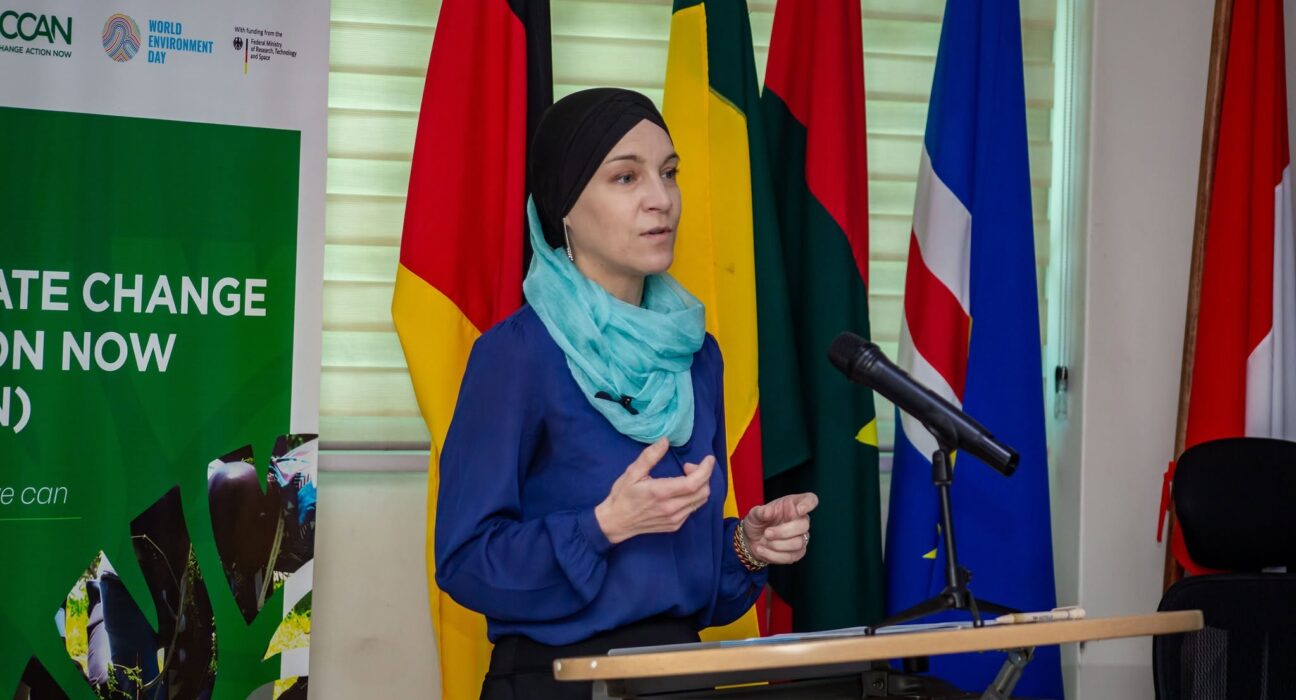
Climate action cannot be achieved through technology and policy alone, with community participation, youth engagement and public awareness remaining critical to long-term environmental solutions, a representative of the German Federal Ministry of Research, Technology and Space (BMFTR) has said.
Speaking during WASCAL’s World Environment Day dialogue in Accra, Head of Department for Energy and Hydrogen Research – Sustainable Energy Systems, Annassi Kerstin, said climate change was already affecting lives and economies worldwide.
“We all know climate change is not a distant threat. It already affects agriculture, water, health, livelihoods, ecosystems and economic development across the world,” she said.
Kerstin stressed that governments and development institutions must focus on implementation and public engagement alongside technological innovation.
“Green hydrogen and renewable energy are not only technological opportunities. They also foster sustainable economic development, energy access and regional cooperation.”
However, she warned that technology alone would not be enough to drive climate transformation.
“Real transformation happens when people are involved, when communities participate, when young people contribute ideas, and when local innovation is encouraged and supported.”
Germany is one of WASCAL’s longstanding development partners and continues to support climate science, renewable energy research and youth-focused innovation programmes across West Africa.
Kerstin cited the WASCAL Innovative Ideas Competition for Sustainable Energy (WISE), revealing that more than 300 proposals had been submitted in its first round.
“West African creativity and innovation is soaring,” she said.
She further emphasized the importance of climate education and reliable information in driving public participation.
“Climate action requires more than technology and policy. It also requires understanding. It requires dialogue. And it requires education.”
She concluded by calling for stronger partnerships among governments, researchers, communities and young people to transform global climate commitments into practical implementation.
“Every informed citizen matters. Every local initiative contributes.”